
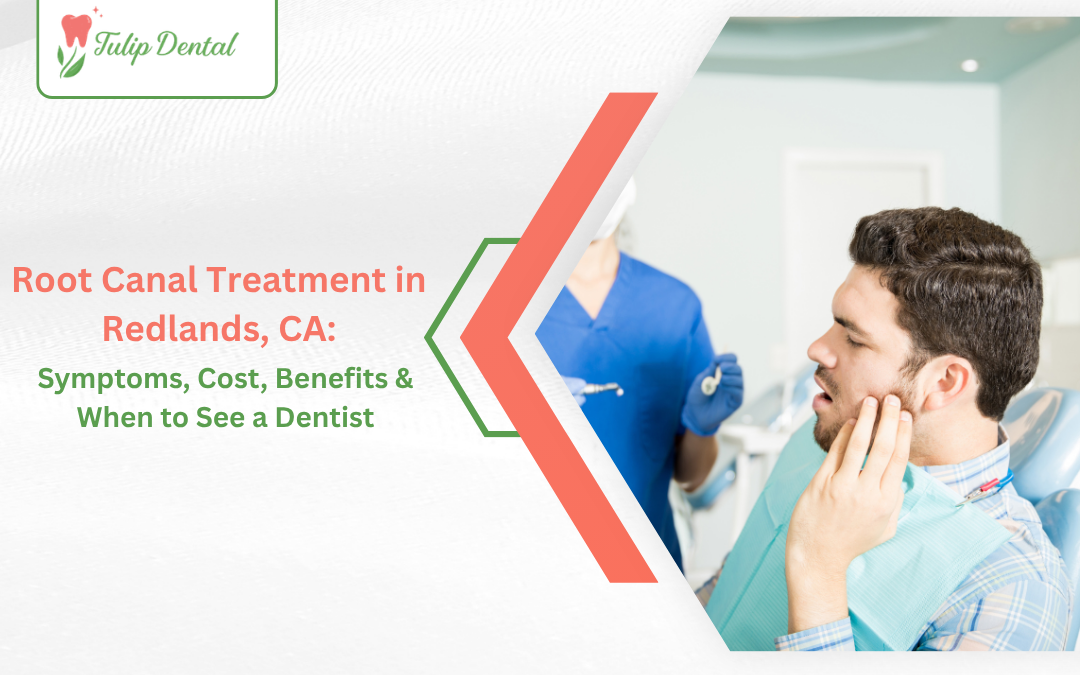
If you have lingering tooth pain, lasting sensitivity to hot or cold, or swelling near a tooth, you may be wondering whether you need a root canal. Root canal treatment removes infected or damaged tissue from inside a tooth so the tooth can often be saved instead of extracted. Only a dentist can tell you whether it’s the right option after an exam. Tulip Dental provides root canal therapy in Redlands, CA for patients in Redlands and nearby Inland Empire communities.
What Is Root Canal Treatment?
Root canal treatment (also called endodontic therapy) treats the inside of a tooth. Beneath the enamel and dentin is the pulp, a soft tissue containing nerves and blood vessels. Deep decay, a cracked tooth, repeated dental work, or trauma can allow bacteria to reach the pulp, leading to inflammation or infection.
During treatment, a dentist removes the affected pulp, cleans and disinfects the inside of the tooth, and seals it. If the infection is left untreated, it can spread beyond the tooth and form a dental abscess.
What Are the Signs You May Need a Root Canal?
Symptoms alone can’t confirm a diagnosis, but these signs often prompt a dental evaluation:
- Persistent or severe tooth pain, especially pain that lingers or wakes you at night
- Sensitivity to hot or cold that continues after the temperature is gone
- Tenderness or pain when biting or pressing on the tooth
- Swelling or tenderness in the gums or face near the tooth
- A darkening or discolored tooth
- A small bump on the gums, a bad taste, or other signs of tooth infection
Many of these can also come from other issues, such as a cavity, gum problems, or a cracked filling. A dentist typically uses an exam and dental X-rays to find the cause.
How Much Does Root Canal Treatment Cost in Redlands, CA?
There is no single price for a root canal. The cost depends on several factors:
- Tooth location. Molars have more canals and are usually more complex than front teeth.
- Complexity of the case. Curved or narrow canals can affect treatment time.
- Extent of infection or damage. Some teeth need additional care before or after the procedure.
- Restoration needed afterward. Many treated teeth need a filling or crown to protect them.
- Dental insurance. Coverage varies by plan, so it’s worth checking your benefits.
- Payment options. Financing may help spread out the cost.
What Are the Benefits of Root Canal Treatment?
- It preserves your natural tooth. Keeping your own tooth helps maintain normal chewing and your bite.
- It addresses the source of the problem. Removing infected pulp treats the cause of the pain, not just the symptoms.
- It helps restore function. After proper restoration, the tooth can often be used for eating and speaking.
- It may help you avoid extraction. Saving a tooth can also avoid the need to replace it later.
What Happens During a Root Canal?
Every case differs, but treatment generally follows these steps:
- Examination and imaging. The dentist evaluates the tooth and takes X-rays.
- Numbing. Local anesthetic is used to keep the area comfortable.
- Access. A small opening is made to reach the pulp.
- Cleaning and disinfection. Infected or damaged pulp is removed, and the canals are cleaned.
- Filling and sealing. The canals are filled and sealed to help prevent reinfection.
- Restoration. A filling or crown is often placed to protect the tooth and restore its shape and function.
Root Canal vs. Tooth Extraction
Both options can relieve pain from a badly damaged tooth, but they lead to different outcomes.
- Root canal: Saves the natural tooth and is often recommended when enough healthy tooth structure remains.
- Extraction: May be appropriate when a tooth is too damaged to restore. It often requires a replacement, such as a bridge or implant, to fill the gap.
When Should You See a Dentist for Tooth Pain?
Don’t wait for pain to become unbearable. Contact a dentist promptly if you have:
- Tooth pain that lasts more than a day or two
- Pain when biting or chewing
- Swelling in the gums, jaw, or face
- A pimple-like bump on the gums or a bad taste in your mouth
- A tooth injury from an accident or a cracked or chipped tooth
Tooth pain and infection can worsen over time, and earlier evaluation may give you more treatment options. If you have swelling with fever, or trouble breathing or swallowing, seek emergency medical care right away.
Why Consider Tulip Dental for Root Canal Treatment in Redlands?
Tulip Dental is located at 720 Brookside Ave, Suite 100, in Redlands, CA, and offers patient-focused dental care, including root canal therapy, restorative dentistry, and tooth extractions, all under one roof. Patients can call or use the contact page to ask questions or request an appointment. Visit the Tulip Dental homepage to learn more about the practice.
Frequently Asked Questions
How do I know if I need a root canal?
Signs may include lingering tooth pain, sensitivity to hot or cold, swelling, pain when biting, or a discolored tooth. Only a dental exam and X-rays can confirm whether a root canal is needed.
How much does a root canal cost in Redlands, CA?
Cost depends on the tooth, the complexity of the case, the extent of infection, any needed crown or filling, and your insurance coverage. Contact Tulip Dental for an evaluation, and see the financial options page for payment information.
Is root canal treatment painful?
The area is numbed before treatment, so most patients feel pressure rather than sharp pain. Some soreness afterward is common and usually manageable. Your dentist will explain what to expect.
How long does a root canal take?
It depends on the tooth and the case. Some are completed in one visit, while others need two. Molars and infected teeth often take longer.
Is a root canal better than tooth extraction?
Not always. A root canal is often considered when the tooth can be saved, while extraction may be better if the tooth is too damaged. A dentist can advise you after an exam.
Schedule a Visit for Tooth Pain in Redlands
If you're dealing with tooth pain, sensitivity, swelling, or signs of a tooth infection, don't wait for it to get worse. Call Tulip Dental or contact us online to schedule an evaluation.
Call Tulip Dental: (909) 488-0222720 Brookside Ave, Suite 100
Redlands, CA 92373