
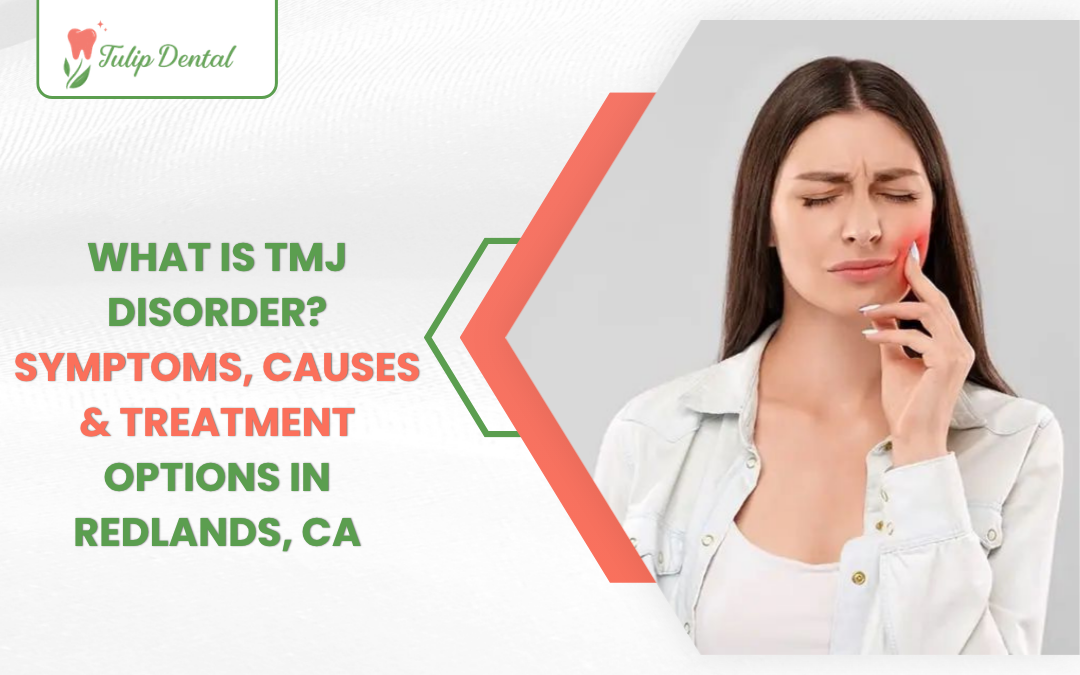
If your jaw clicks every time you chew, or you wake up with a dull headache you can't explain, you might be dealing with TMJ disorder. It quietly affects daily life, eating, talking, even sleeping, until the discomfort becomes too hard to ignore.
At Tulip Dental in Redlands, CA, we see patients regularly who didn't realize their jaw pain, ear pressure, or headaches were connected to their temporomandibular joint. The good news is that TMJ disorder is highly treatable once it's properly diagnosed. Here's what it is, why it happens, and the treatment options available right here in Redlands.
TMJ disorder, short for temporomandibular joint disorder, refers to pain or dysfunction in the joint connecting your jawbone to your skull. You have two of these joints, one on each side of your face, just in front of your ears. They work together every time you speak, chew, yawn, or smile.
When this joint isn't moving the way it should, whether from injury, misalignment, inflammation, or muscle strain, you end up with what dentists call TMJ dysfunction. It can affect one side of the jaw or both, ranging from a mild clicking sound to pain that interferes with eating and sleeping.
Because the joint sits so close to the ear, nerves, and facial muscles, its effects often reach far beyond the jaw itself. That's why many patients are surprised to learn their chronic headaches or ear pain are actually rooted in jaw joint disorder.
Common Symptoms of TMJ Disorder
TMJ symptoms vary from person to person, and they don't always show up where you'd expect. Some of the most common signs include:
- Jaw pain or tenderness, especially near the ears
- Clicking, popping, or grinding sounds when opening or closing your mouth
- Difficulty or discomfort while chewing
- Jaw that feels stuck or locks in place
- Frequent headaches, particularly around the temples
- Ear pain or a feeling of fullness without an actual ear infection
- Neck and shoulder stiffness
- Facial pain or swelling on one side
Can TMJ Cause Headaches and Ear Pain?
Yes, and it's one of the most overlooked connections in dentistry. The temporomandibular joint sits right next to your ear canal, and the muscles involved in jaw movement also connect to areas around your temples and neck. When those muscles tighten or the joint becomes inflamed, the pain can radiate and feel exactly like a tension headache or an ear infection. Many patients see other specialists for months before discovering the root cause was their jaw joint all along.
Can TMJ Affect Sleep?
It can, and often does. Jaw clenching and teeth grinding, known as bruxism, frequently happen during sleep without the person realizing it. This constant strain on the jaw muscles can lead to morning headaches, sore jaws upon waking, and disrupted sleep. TMJ dysfunction is also sometimes linked to sleep apnea, since both involve jaw and airway alignment.
What Causes TMJ Disorder?
There's rarely a single cause behind TMJ disorder. More often, it's a combination of factors that gradually strains the joint:
- Teeth grinding or clenching (bruxism): Often happens during sleep or under stress, putting constant pressure on the jaw joint.
- Bite misalignment: When your upper and lower teeth don't meet properly, the jaw compensates over time.
- Jaw injury or trauma: A direct blow to the face or jaw can damage the joint structure.
- Arthritis: Like other joints in the body, the TMJ can be affected by inflammatory or degenerative arthritis.
- Chronic stress: Stress often shows up physically as jaw tension, even without you realizing it.
- Poor posture: Especially forward head posture from prolonged phone or computer use, which strains jaw and neck muscles.
How Is TMJ Disorder Diagnosed?
TMJ diagnosis starts with a conversation and a hands-on exam. At Tulip Dental, our team listens for clicking or popping as you open and close your mouth, checks for tenderness around the joint and surrounding muscles, and reviews your bite alignment. We may also use digital imaging to get a clearer picture of the joint and rule out other causes like dental infections or sinus issues.
A thorough diagnosis matters because TMJ dysfunction can mimic other conditions. Getting it right the first time means you can move straight into treatment instead of guessing at the cause.
TMJ Treatment Options in Redlands, CA
The right TMJ treatment depends on what's driving your symptoms and how severe they are. Most patients respond well to non-surgical TMJ treatment, especially when caught early. Common approaches include:
Custom Night Guards and Occlusal Guards
A custom-fitted night guard is one of the most effective ways to protect your teeth and ease jaw strain caused by grinding or clenching. Unlike store-bought versions, a custom occlusal guard is molded to your bite, making it more comfortable and more effective at preventing nighttime damage.
Oral Appliance Therapy
For patients whose jaw pain is tied to bite alignment, an oral appliance can gently reposition the jaw into a more natural resting position. This reduces pressure on the joint and often brings noticeable relief from headaches and facial pain within weeks.
Lifestyle and Stress Management
Simple changes help. Eating softer foods during flare-ups, applying warm compresses, practicing jaw relaxation exercises, and managing stress through better sleep or relaxation techniques can all reduce TMJ symptoms over time.
Bite Correction
When misalignment is the underlying cause, correcting the bite through dental adjustments or orthodontic options resolves TMJ pain at its source rather than just managing symptoms.
When Is TMJ Surgery Necessary?
Surgery is rarely the first step. It's typically only considered when non-surgical treatments haven't worked and there's clear structural damage to the joint. Most patients at our Redlands clinic never need to reach that point, especially when treatment begins early.
Why Choose Tulip Dental for TMJ Treatment in Redlands, CA
If jaw pain, clicking, or unexplained headaches have been part of your daily routine, it's worth getting an answer instead of just living with it. At Tulip Dental, located at 720 Brookside Ave, Suite 100, Redlands, CA 92373, our team takes a personalized approach to every TMJ case we see. We start by listening to your symptoms, then use a thoughtful combination of diagnosis, custom appliances, and practical lifestyle guidance to bring real relief.
TMJ disorder rarely exists in isolation. It often overlaps with teeth grinding, sleep quality, and stress levels, which is why our approach looks at your overall oral health rather than the jaw joint alone. Whether you're looking for a TMJ specialist in Redlands, CA, or simply want to understand what's causing your jaw pain, our team is here to help you find lasting relief.
If you're ready to stop guessing and start feeling better, schedule a visit with Tulip Dental today and take the first step toward a pain-free jaw.
Frequently Asked Questions
What is TMJ disorder?
TMJ disorder is a condition affecting the temporomandibular joint, the hinge connecting your jaw to your skull. It causes symptoms like jaw pain, clicking, stiffness, and headaches, often triggered by teeth grinding, stress, or bite misalignment.
What causes TMJ disorder?
The most common causes include teeth grinding or clenching, bite misalignment, jaw injury, arthritis, chronic stress, and poor posture. Often, it's a combination of these factors rather than just one.
Can TMJ disorder go away on its own?
Mild cases can improve with rest, stress reduction, and avoiding hard foods. However, persistent or worsening symptoms usually need professional treatment, such as a custom night guard or bite correction, to prevent long-term joint damage.
How long does TMJ treatment take to show results?
Many patients notice improvement within a few weeks of starting treatment, such as wearing a custom occlusal guard or oral appliance. Full relief timing depends on the severity of the condition and how consistently the treatment plan is followed.
Is TMJ treatment covered by insurance?
Coverage varies by provider and plan. Tulip Dental offers flexible payment options and can help you understand what costs may be covered so TMJ treatment stays accessible and affordable.